
Electrical Wiring I
- Jun 14, 2023
- 11 min read
Updated: Jun 19, 2023

Table of Contents
Introduction to Electrical Wiring
This module provides an overview of electrical wiring principles and safety considerations.
It introduces the basics of electrical wiring, such as the function and types of wires and cables.
The module defines key electrical terms and provides an overview of electrical materials and tools.
The module covers the different types of electrical tools and equipment that are commonly used in electrical wiring.
It also includes information on measurement instruments that are used to ensure electrical safety and functionality.
The module discusses overcurrent protective devices and their importance in preventing electrical fires and damage.
Safety considerations are emphasised throughout the module, including the importance of following electrical codes and regulations.
Basic Electrical Wiring Principles and Safety Considerations
Safety: Safety is a key principle in electrical wiring. All electrical wiring must be done safely to prevent electric shock, fire or other hazards.
Safety Equipment:
Face Shield
Safety Glasses
Non-conductive head protection
Electrical Gloves
Insulated steel-toed boots
Good practices:
Before stepping into a Switch Room, or handling Electrical Installations:
Smell for ionisation, foul or burning smell
Hear for humming, hissing or rapid energising and de-energizing of contactors (signs of overheating)
See, look out for irregularities like improper installation, broken handle of MCCB or sign of water seepage. Do not step or touch the water surrounding the switch, it could be ‘live’
Feel the heat in the room
Touch for vibration, surface temperature.
Proper wire size: Choosing the right wire size is important to ensure that the electrical system works properly and safely. The size of the wire depends on the amount of current it needs to carry.
Grounding: Grounding is the process of connecting electrical systems to the ground to prevent electric shocks and to protect equipment.
Circuit protection: Circuit protection devices such as fuses, circuit breakers, and surge protectors are essential to protect the electrical system from overloads, short circuits, and voltage surges.
Understanding electrical codes: Electrical codes are established by local, state, and national authorities to ensure safe and proper electrical installations. It is important to understand and follow these codes when installing electrical wiring.
Proper connections: Proper connections between wires and devices are crucial to ensure that the electrical system works properly and safely. Connections should be tight and free of any damage or corrosion.
Use of appropriate tools: Using appropriate tools for electrical wiring tasks is important to ensure that the work is done safely and properly. Tools should be properly insulated and appropriate for the task at hand.
Attention to detail: Attention to detail is essential in electrical wiring to ensure that all connections are made correctly and safely. Even small mistakes can lead to serious electrical hazards.
Definitions
Alternating Current (AC): Alternating current (AC) is an electrical current that changes direction periodically. It is commonly used for power transmission in electrical grids and in most household and commercial electrical systems. In AC, the current flows back and forth through a conductor, typically at a frequency of 50 or 60 hertz. AC voltage can be easily transformed using a transformer, which is why it is preferred for long-distance transmission of power.
Circuit: A circuit is a closed loop through which an electric current can flow. It is composed of various electrical components, such as resistors, capacitors, inductors, switches, and diodes, connected in various ways to create a desired electrical function or operation. Circuits can be classified into various types, such as series, parallel, and series-parallel, depending on the way the components are connected.
Conductor: A conductor is a material or object that allows the flow of electric current through it. In electrical wiring, copper or aluminium wires are commonly used as conductors. The size or diameter of the wire is important as it affects the amount of current it can carry safely without overheating.
Connectors and Adaptors: Connectors and adaptors are components used to join two or more electrical circuits or devices. They are used to connect wires or cables to each other, or to connect a wire or cable to a device. Connectors come in various types, including plug-and-socket connectors, screw terminals, crimp connectors, and wire nuts. They may also be classified based on the number of pins, size, and application. Adaptors, on the other hand, are devices used to convert one type of connector into another. For example, a plug adaptor may be used to convert a two-pin plug into a three-pin plug. Adaptors may also be used to change the gender of a connector, such as converting a male connector into a female connector.
Current: Current is the flow of electric charge in a circuit, typically measured in amperes (A). It is the rate at which electrical energy is moving through a conductor.
Direct Current (DC): Direct Current (DC) is a type of electrical current that flows in a constant direction, unlike Alternating Current (AC) that periodically reverses direction. DC is commonly used in batteries, electronic devices, and some renewable energy systems. DC voltage can be regulated or transformed using electronic devices such as rectifiers and inverters.
Electricity: Electricity is a form of energy resulting from the movement of charged particles, such as electrons or ions
Insulator: An insulator is a material that does not easily conduct electricity. In electrical wiring, insulators are used to protect and separate electrical conductors from each other and from the environment. Examples of insulators used in electrical wiring include rubber, plastic, glass, and ceramic materials.
Metallic Conduits: Metallic conduits are types of pipes that are used to protect and route electrical wiring in a building or structure. They are typically made of steel or aluminium and are designed to provide a safe and secure pathway for electrical wires, while also protecting them from damage caused by environmental factors such as moisture, heat, or physical impact. Metallic conduits can be rigid or flexible and can be used for a variety of applications, including residential, commercial, and industrial wiring. They are often used in conjunction with other types of electrical wiring components, such as connectors, junction boxes, and cable trays, to create a complete electrical system.
Non-Metallic Conduits: Non-metallic conduits, also known as plastic conduits, are types of conduits that are made of non-metallic materials, such as PVC (polyvinyl chloride), HDPE (high-density polyethylene), or fibreglass. These conduits are popular for their lightweight, flexible, and corrosion-resistant properties, making them suitable for a variety of electrical applications, including residential and commercial wiring, underground cabling, and industrial installations. Non-metallic conduits are also easy to install and maintain, as they can be cut, bent, and joined using simple tools and fittings.
Power: Power refers to the rate at which energy is transferred or transformed from one form to another. It is the amount of energy per unit time that is consumed or produced by a device, circuit, or system. The unit of power is watt (W), which is defined as the rate of energy transfer or work done per unit time, or joules per second. Power can be calculated by multiplying voltage and current, or by using other relevant formulas, such as P = VI, P = I^2R, P = V^2/R, etc.
Resistance: Resistance is the measure of an object's ability to resist the flow of electric current through it. It is measured in ohms and is denoted by the symbol Ω (omega). The higher the resistance of an object, the lower the amount of current that can pass through it. Resistance is affected by various factors such as the object's material, temperature, and dimensions.
Voltage: Voltage is the electrical potential difference between two points in a circuit or an electrical system. It is commonly measured in volts (V) and represents the amount of electrical energy that is available to do work per unit charge. In other words, voltage is the force that pushes electrical charges through a circuit, and it determines the amount of current that flows through a circuit for a given resistance.
Amperage (Amps): Amperage, or amps for short, is the unit used to measure electrical current flowing in a circuit. The ampere is defined as the amount of current that, when flowing through two parallel conductors placed one meter apart in a vacuum, produces a force between the conductors of 2 x 10^-7 newtons per meter of length.
Ampere: An Ampere, commonly denoted as "Amp", is the unit of electric current in the International System of Units (SI). It measures the amount of electrical charge flowing through a conductor in one second. One Ampere of electric current is defined as the flow of one Coulomb of electric charge per second.
Centimeter: Centimeter is a unit of measurement for length in the metric system. It is equivalent to one hundredth of a meter (0.01m) or approximately 0.39 inches.
Inch: An inch is a unit of length in the imperial and United States customary systems of measurement. It is defined as 1⁄12 of a foot, which is equal to 2.54 centimeters in the metric system
Millimeter: Millimeter is a unit of length in the metric system, which is equal to one-thousandth of a meter.
Ohm: Ohm is the unit of electrical resistance in the International System of Units (SI). One ohm is the resistance value through which a current of one ampere will flow when a voltage of one volt is applied.
Volt: A volt is the unit of measurement for electric potential difference, electromotive force, or voltage. It is defined as the amount of electrical potential energy that is transferred between two points in a circuit when one ampere of current is flowing between them and there is a resistance of one ohm. The symbol for volt is "V."
Electrical Materials and Tools
Types of wires and cables used in electrical wiring
There are several types of wires and cables used in electrical wiring, including:
Non-metallic sheathed cable (NM) Non-metallic sheathed cable (NM) is a type of electrical cable that contains two or more insulated wires and a bare ground wire, all wrapped in a plastic outer jacket. NM cable is commonly used for residential wiring, including outlets, switches, and lighting fixtures. The most common sizes of NM cable are 14, 12, and 10 gauge, with 14 gauge being the smallest and 10 gauge being the largest. The jacket of NM cable is typically color-coded to indicate the wire gauge and the number of conductors inside the cable. Non-metallic (NM) cables are mostly suitable for dry spaces such as in residential houses in Singapore. This type of cable usually contains a live wire carrying the current, a ground wire, and a neutral wire. This type of cable usually contains a live wire carrying the electricity, a ground wire, and a neutral wire. These wires are distinguished by specific electrical wiring colours, with red or brown for live wire, black or blue for the neutral wire, and a combination of green and yellow for the ground wire.
Underground feeder (UF) cable Underground feeder (UF) cable is a type of electrical cable that is specifically designed for underground installation. It is often used for outdoor lighting, water pumps, and other types of outdoor wiring applications. UF cable typically consists of two or three insulated conductors, along with a ground wire, that are surrounded by a waterproof jacket. The waterproof jacket protects the conductors from moisture and other environmental factors, allowing the cable to be buried directly in the ground without the need for a conduit. Underground Feeder (UF) cable is one form of a non-metallic cable made up of a solid plastic sheathing individually covering each insulated live wire, neutral wire, and ground wire. Unlike the NM cable, the solid plastic sheathing does not cover the three wires together. As such, the UF cable is often ideal for wet places like bathrooms or on exposed, open grounds.
Armored cable (AC) Armored cable (AC), also known as metal-clad (MC) cable, is a type of electrical cable that is covered in a flexible metal sheath. The sheath provides protection from physical damage and helps to contain any fires that may occur. Armored cable is often used in commercial and industrial settings where the wiring may be exposed to harsh conditions or high traffic areas. It can also be used for residential wiring in areas where there is a risk of damage to the wiring, such as in unfinished basements or garages.
Metal-clad cable (MC) Metal-clad cable (MC) is a type of armoured electrical cable consisting of a stranded or solid copper or aluminium conductor insulated with a thermoplastic or thermosetting polymer. The insulated conductors are then wrapped in a metallic layer, typically aluminium or steel, for protection and grounding. Finally, an outer layer of thermoplastic or thermosetting polymer is added for additional protection and to provide a finished surface. MC cable is commonly used in commercial and industrial construction for power and lighting circuits.
Low voltage landscape lighting cable Low voltage landscape lighting cable is a type of cable used specifically for outdoor lighting systems in gardens, parks, and other outdoor areas. These cables are usually made of copper or aluminium wire with a polyethylene jacket for protection against outdoor elements. They typically have a low voltage of 12-24 volts and are designed to withstand exposure to moisture, sunlight, and temperature variations. Low voltage landscape lighting cables come in different sizes and lengths depending on the specific needs of the lighting system.
Coaxial cable Coaxial cable is a type of electrical cable consisting of an inner conductor, an insulating layer, a metallic shield, and an outer insulating layer. It is commonly used to transmit video, audio, and data signals in a variety of applications, including cable TV, satellite TV, internet, and security systems. Coaxial cable is designed to carry high-frequency signals with low loss and interference. It is known for its high bandwidth, low noise, and long-distance transmission capabilities.
Ethernet cable Ethernet cable is a type of twisted-pair cable used for computer networking. It is commonly used to connect devices to a local area network (LAN) or to the Internet. Ethernet cables can be categorised based on their speed and performance, with categories ranging from Cat5 to Cat8. They typically have four pairs of twisted copper wires, and come in different lengths and colours.
Fiber optic cable Fiber optic cable is a type of cable that contains one or more optical fibers that are used to transmit digital data signals over long distances. It consists of a bundle of glass threads, each of which is capable of transmitting messages modulated onto light waves. Fiber optic cables are commonly used in telecommunications, networking, and broadcasting applications, as they are capable of transmitting large amounts of data over long distances with very little loss in signal quality.
Electrical conduit Electrical conduit is a type of tubing or raceway used to protect and route electrical wiring. It can be made of metal, plastic, or fiber. Electrical conduit is typically used in commercial and industrial buildings, but can also be found in residential applications. There are different types of electrical conduit, including rigid metal conduit (RMC), electrical metallic tubing (EMT), intermediate metal conduit (IMC), flexible metal conduit (FMC), liquid-tight flexible metal conduit (LFMC), and PVC conduit.
Electrical Tools:
Screwdrivers | Made of steel hardened and tempered at the tip used to loosen or tighten screws with slotted heads |
 | Allen Screwdrivers
|
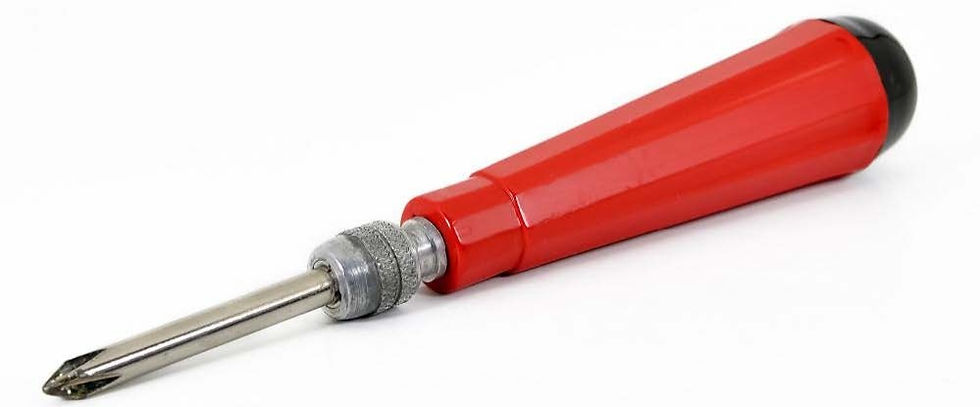 | Phillips Screwdrivers
|
 | Standard / Flat Screwdrivers
|
 | Stubby Screwdrivers
|
Pliers | These are made from metal with insulators in the handle and are used for cutting, twisting, bending, holding, and gripping wires and cables. |
 | Combination Pliers
|
 | Long Nose Pliers
|
 | Side Cutting Pliers
|
Others | Non-powered and powered tools |
 | Electrician’s Knife
|
 | Hacksaw
|
 | Hammers
|
 | Portable Electric Drill
|
 | Wire Stripper
|
  | Pipe Cutter
|
Electrical Equipment and Materials:
Used to control the flow of current in an electrical circuit
Carry electrical current from source to the load or current consuming appliances/ apparatus
Hold and secure wires to its fixtures inside and outside houses and buildings
Protect the houses, buildings, appliances and instruments from any destruction and damage.
 | Clamps
|
  | Conduits/ Pipes
 |
  | Connector
|
 | Convenience Outlet
|
 | Electrical Wire/ Conductors
|
 | Flat Cord
|
  | Junction Box
|
 | Lamp holders
|
 | Male Plug
|
 | Switch
|
 | Utility Box
|
Measurement instruments
 | Ammeter
|
 | Clamp Ammeter
|
 | Measuring Tape/ Pull-Push Rule
|
 | Megger
|
 | Micrometer
|
 | Multimeter / Volt-Ohm Meter (VOM)/ Multitester
|
 | Ohmmeter
|
 | Ruler/ Foot Rule
|
 | Voltmeter
|
 | Wire Gauge
|
Overcurrent protective devices
  | Circuit Breaker
|
 | Fuse and Fuse holder
|
 | Protection Relay
|
 | Consumer Unit
Common types used in Singapore is the DIN rail mounted type. |
 | Residual Current Devices (RCD)
Residual Current Circuit Breaker (RCCD), common device name in this group that is used together with the MCB to provide a complete protection.
|
Practical Assessment
Based on Core-Trade Training - Electrical Wiring Installation
Assessment outline:
Installation of metal conduit and trunking
Installation of PVC trucking complete with correct size, wirings, terminating at light fittings, switches, and terminal block.
Practise good electrical wiring installation habits
Practice worksite safety relating to electrical activities
Evaluation Items | Skills Element/ Operations |
|---|---|
Installation of metal conduit |
|
Installation of metal trunking |
|
Accuracy of project |
|
Circuit performance |
|
Selection of cable |
|
Installation of PVC trunking |
|
Installation of equipment and cable termination |
|
Accuracy of project |
|
Safety and work attitude |
|
General Instructions to Candidates
Candidates have 15 minutes to check the materials and tools provided for the assessment.
Candidates can choose to use their own tools and equipment
Candidates may use any conventional methods that have been accepted as good industry practices to conduct the assessment.
Candidates are advised to read the instructions and study the drawings carefully in order to plan and execute the assessment correctly and productively.
Candidates are to use their own discretion when dimensions are not provided.
Candidates are to exercise extreme care and caution when handling powered tools and equipment.
Candidates are not allowed to talk or help each other during the assessment.
No additional materials will be issued during the assessment.
Tools and equipment on loan to candidates shall be cleaned and returned to assessor in-charge before leaving the assessment premises.
Workplace must be cleaned and tidied before leaving the assessment premises.
All assessment papers are strictly confidential and shall not be taken out of the assessment premises. No photography or videography of the assessment is allowed by the candidates
Project Instructions to Candidates
The duration allocated for this practical assessment is 4 hours. No extension of time allowed.
This assessment consists of two parts:
Part 1: Installation of PVC trunking
Part 2: Industrial Electrical Installation
Candidates must complete Part 1 before proceeding to Part 2.
Part 1: Installation of metal conduit and trunking
a. Metal conduit
Candidate has to use a ¾” metal former to make an offset bend as shown in the drawing and terminate the ends to the metal trunking and metal box with couplings and bushes as shown in the Drawing.
b. Metal trunking
Candidate has to mark, cut and bend to form on 90 degrees metal trunking bend complete with cover according to the dimensions specified in the Drawing. All cut edges shall be neat, straight with no jiggered edge.
c. Candidate has to assemble the metal conduit and trunking as shown in Drawing. The metal trunking and conduit installation must be fastened on the wiring panel with saddle and screws. No wiring is required for this installation.
Part 2: PVC trunking and wiring circuit installation
a. Candidates is tl install the PVC trunking and fittings according to the given dimensions and layout shown in Drawing.
b. Candidate is to lay the correct size of wires and connect up the switch light fittings and switch socket outlet to the terminal block. The two light fittings (L1 and L2) are control by one single pole switch (S1). The lighting and power circuits shall be terminated at the terminal block (TB).
c. Candidate may check the completed wiring with a multimeter for its performance. Any rectifications must be done within the given duration.